
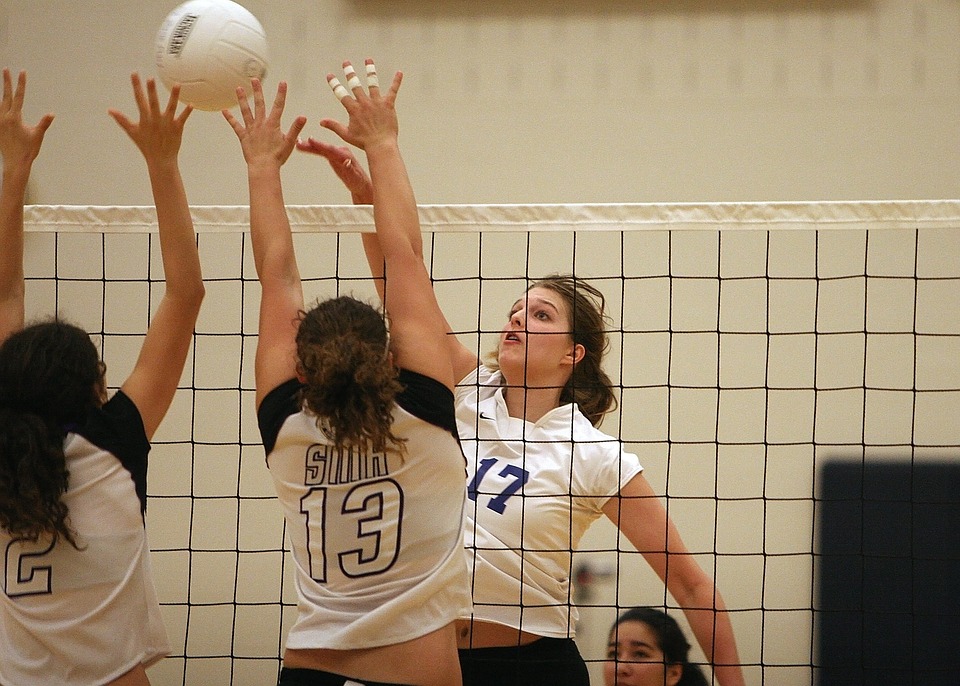
Drills are the best and only way to improve volleyball players’ skills and build muscle memory. Feel free to incorporate any or all of the following volleyball drills into your next workout or pre-game warm-up.
When implementing new volleyball drills at your next practice, be sure to fully explain each movement or step in the drill and allow the players to practice at half speed before performing the drill regularly. Not only is this intended to prevent injury, but it also gives players the opportunity to feel their way through the exercise so they know exactly how it should affect their muscles. There is no point in doing exercises if they are not done correctly!
I would describe her as the queen of the court
One of my favorite volleyball drills is the one we called Queen of the Court. One of the best things about this drill is that it can be easily adapted to suit almost any number of players. Start by dividing your team into teams of 2, 3, or 4 – whichever works best for the number of players playing.
The drill starts out like any other scrimmage game, with one team standing on either side of the court. The first team serves the ball, and if they get a point from their serve, they stay on the court and face a new team of opponents. Play continues in this manner, with the team that scores remaining until a point is scored against them. You can either play until one team reaches a certain number of points or a certain number of minutes, and the team with the most points at the end is the winner.
The best thing about the “Queen of the Court” workout is its fast paced intensity that forces players to focus and play as a team. Added incentives for the winning team (or losing teams) will help boost the competitive spirit and bring out the best hustle in your players.
More fun than digging in the garden
next from Volleyball training exercises Which I like to use with my team lets them work on their drilling skills. Divide your team into partners and have each stand 20 to 25 feet apart. One player is the hitter and the other is the digger. The hitter begins drills by throwing or hitting fast-moving balls at the driller, who will drill for them as quickly and accurately as possible.
The main thing for the excavator to work on is to maintain correct body posture, which is feet at least shoulder-width apart and facing straight ahead, hands in front of them with palms facing the ceiling. The excavator’s arms and shoulders should be as relaxed as possible with shoulders forward and hips back. Try to stay as low and balanced as possible by keeping your hands in front of your head, your head in front of your shoulders, your shoulders in front of your knees, and your knees in front of your feet. Make sure your diggers wear knee and elbow pads to avoid scrapes or traumatic injuries.