
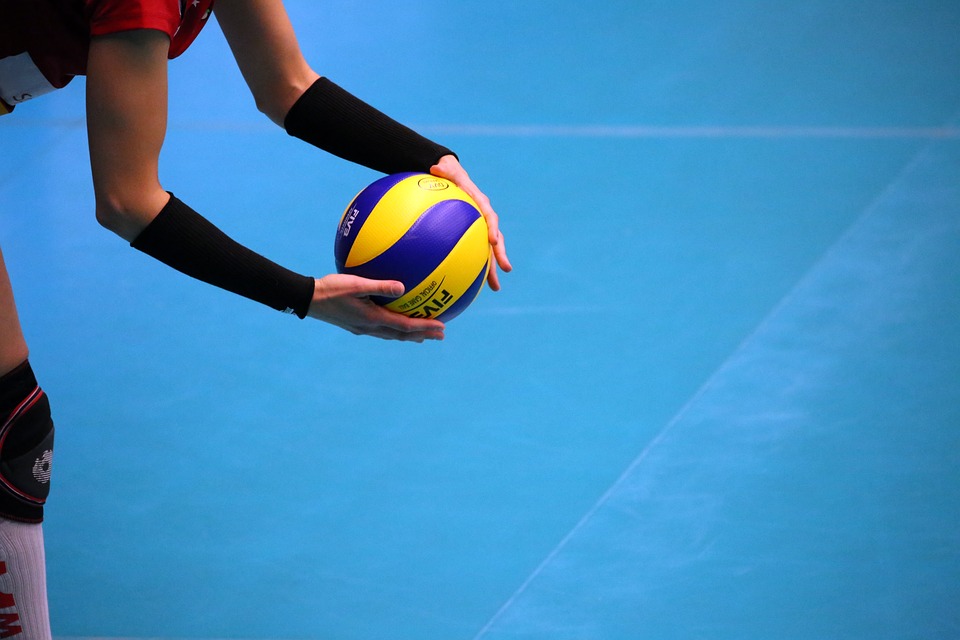
In volleyball, the serve is the most important component of the game. Failing to deliver and losing is a sure thing, but mastering the serve and winning is almost undeniable. Whether a beginner or a professional athlete, honing the basics of serving is essential to improving your game performance.
• Service 101
To effectively deliver a service, the basics of oversubmission must be mastered before moving on to more advanced techniques.
1. Body Position – Feet, hips and shoulders are facing the desired direction of the serve. If it is right-handed, the left foot should be slightly in front of the right foot.
2. Putting the Ball – Place the ball in the non-serving hand at chest height. The elbow should be loose with a slight bend.
3. Arm Position – Elbow and hand of serving arm should be bent at 90 degrees, approximately ear height, with hand open, wrist closed. The elbow must be kept at or above ear level during the serve to avoid hitting the net.
4. Toss the ball – The most important component of the serve is the layup. It should be 12″-18″ above the server’s head, and placed in front of the server’s shoulder. Keep the movement simple and reach a high level.
5. Contact with the ball – hit the ball with the heel of the hand through the middle of the ball. The hand should be open and flat with the wrist locked and the arm extended and moving forward. Continue the movement, finishing with your striking hand in line with the body. This ensures maximum speed and power.
Common errors
Weak Toss – Consistency is the most important aspect of the toss. Maintain the same height and position with each throw, aim for one point on the fly ball, and hit as hard as you can.
Loose wrist or hand – The wrist and hand should be stiff when hitting the ball.
Lack of Confidence – Practice makes perfect, not just in the physical aspect of the game, but in the mental aspect. Try to simulate the stress of the game while training with various drills.
• drilling
Drills are essential in establishing an unwavering submission. Without exercises, reliable performance cannot be achieved. The bottom line is that repetition builds muscle memory. Muscle memory leads to consistency. Consistency leads to scoring. Consistent scoring equals winning.
Beginner level training (requires 2 players)
Have one player stand on each side of the court, and take turns serving each other. Start at the 10 line, which is a good point to serve the ball without too much effort. Gradually progress back every 5 beats until you finally reach beyond the baseline. When the skill level improves, start moving to different areas of the court in order to perfectly position the serve.
Mid-level service training (group training)
The purpose of this drill is to improve accuracy. Divide the team into two teams, with one on each side of the net. Place a chair in Zone 1 on each side of the grid. Have one player from each team represented on a chair. The remaining members try to serve close enough for the individual on the chair to catch the ball in the air. If the ball is caught, the server must run under the net, swapping places with the person on the chair, while that person joins the servers team. Continue this sequence, moving the chair to a new area as you change people in the chair.
•strategy
Like any sport, strategy can make or break the outcome of a volleyball game. When executed properly, strategy can build team confidence and momentum. But before formulating these tactics, players must first be introduced to the types of serve. Secondly, to educate the players in the stadium areas. Finally, understanding the opponent’s strengths and weaknesses is the key to an effective attack.
Strength training
Volleyball is a physically demanding sport that requires strength, flexibility, and explosive power. In order to prevent injuries and improve overall performance, players should participate in resistance training. This training is vital in preparing athletes for the physical demands they go through during a match. Special emphasis should be placed on core strength, which facilitates balance. Joint flexibility and tendon strength are other areas that require focus.